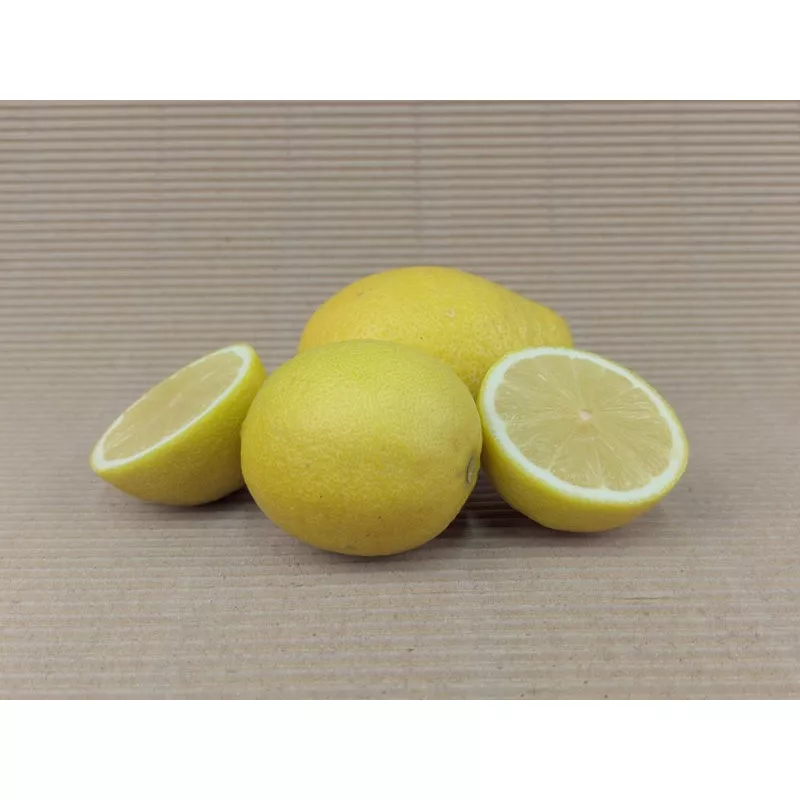
Lemons Eureka
Origin
Variety selected in California around 1858 from seeds imported from Italian lemon (possibly Lunario), commercially introduced by Thomas A. Garey and Andrew Boyle in Los Angeles; clones such as Frost Eureka, Taylor and Allen exist. It is one of the two main lemon varieties recognized in the IVIA Germplasm Bank, with identifiers such as Eureka Allen and Eureka Frost, also used as a garden and orchard variety.
Characteristics
Medium to high vigor tree, with an open habit, a rather spreading canopy and fewer thorns than the Lisbon or Fino variety; medium to large leaf, with a crenate margin and a strong lemon smell when broken. Oval or oblong fruit, with a modest apical nipple and no neck in the peduncle area; skin relatively medium to thick (5-6 mm), yellow color at maturity; green-yellow flesh; juicy, with juice content of 40-45 % of the fruit weight; variable seeds, between 8 and 13 per fruit, depending on temperature during flowering; pronounced acidic flavor, strong classic lemon organoleptic profile.
Harvest time
In the Comunitat Valenciana the harvest for Eureka is approximately between October 10 and February 20; harvesting can begin with fruit still greenish, but when it has adequate size and sufficient juice percentage; the fruit can remain on the tree for a reasonable time without severe loss of quality if maturity and storage conditions are controlled.
Culinary uses
Variety suitable both for fresh consumption and for juice due to its high juice content and acidity; it is also used for culinary preparations that require pronounced lemon aroma such as dressings, seasonings, preserves or traditional conserves; in Mediterranean gastronomy it is incorporated into fish dishes, salads, citrus sauces, pastries and to flavor liqueurs; the zest of its peel provides essential oils with sufficient intensity for delicate uses.
Agronomic notes
It enters production early and has high productivity; a reflowering variety, with floral flushes several times a year, although the optimal commercial yield occurs between autumn-winter; moderate sensitivity to cold, less than Lisbon but with damage in very cold climates; suffers from sunburn and fruit defects if grown in very sunny exposures; postharvest is well tolerated if kept between 3-7 °C, with risk of physiological disorders such as peteca if temperatures are higher; recommended rootstock for local adaptation and to avoid chlorosis, and its longevity is lower than other varieties; commercial limitations include seed and size variability depending on the climate and the clone used.
Harvest window
Out of season · Starts in 21 days 10 oct → 20 febIndicative dates; may vary depending on harvest and weather.
