Select shipping country

In order to provide you with the final prices of the products (including taxes and transport costs), we need you to select the country of destination from the following list of countries.

On 1 July 2021 the One-Stop Shop (OSS) directive for e-commerce came into force. This will require us to apply the V.A.T. rate corresponding to the destination country of the shipment.

Shopping cart
Your shopping cart is empty!

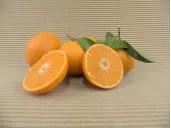
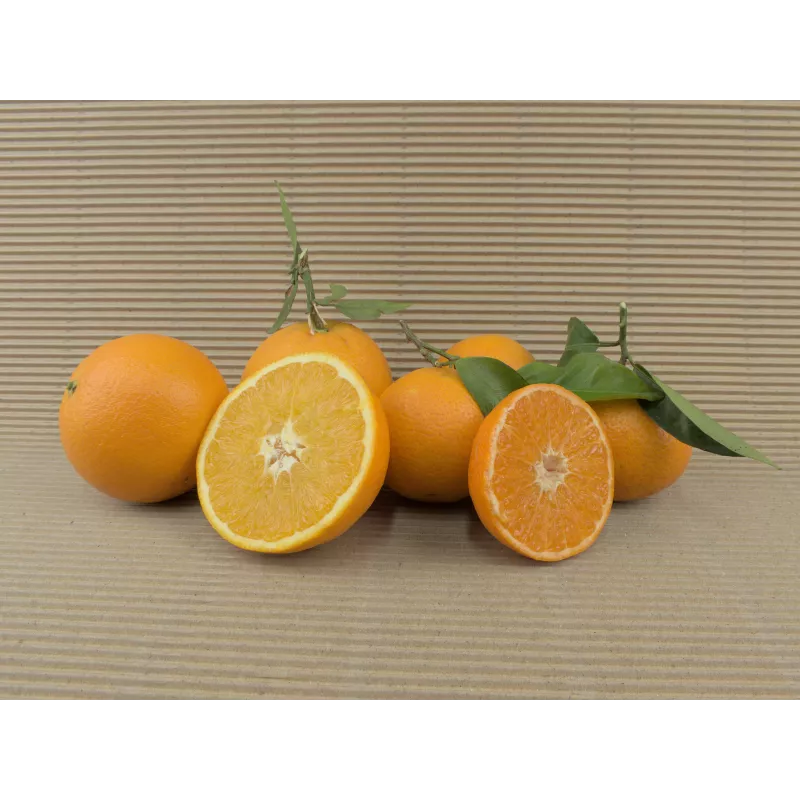
Mixed Box 15 kg (10 kg oranges + 5 kg mandarins)

Navelina/Orogròs Conventional farming Out Of Stock
44.50 2.97 €/kg

Oranges Navelina

Navelina Orange

GENERAL DESCRIPTION:
It is the earliest orange of the Navel class, more round than flat, large in size, and sometimes with a very noticeable navel. Its skin is slightly rough, of medium thickness, and its color can vary between a yellowish orange and an intense bright orange. It has very juicy pulp, seedless, excellent flavor, and very sweet, suitable for both juice and table orange. Its harvesting period is between November and February.

CALIBER:
The average caliber of this variety is large, with the majority of pieces measuring above 80 mm. The minimum commercial caliber in Naranjas de Cullera for this variety is 67 mm.

DURABILITY:
It can be kept in good condition for up to 30 days after harvesting (some pieces even longer), always following our instructions for preservation: immediately remove them from the box, spread them on a wide surface, with temperature and humidity not extreme, without direct sunlight or heat sources, and discard any pieces that may spoil. This is a general rule, considering that they are perishable and without post-harvest treatments, it is also possible that some pieces may spoil before 30 days.

POTENTIAL DRAWBACKS:
It may have aesthetic defects that do not affect its quality (see our blog for more information). In advanced stages of ripening, it can become soft and may change in flavor. Like all fresh oranges without post-harvest treatments, they do not peel well by hand.

Mandarins Orogròs

Clemenrubí / Orogròs

GENERAL DESCRIPTION:
Clemenrubí and Orogròs are the earliest members of the Clementine family. They are medium-sized and have an intense orange color, although they often retain some green areas on the skin when fully ripe. Their pulp is fine and has an excellent flavour, making them considered mandarins of very good quality. Their juice is also excellent. Their skin is soft and slightly thick, making them easy to peel and separate into juicy segments, they are ideal for children. Clemenrubí is a variant of Orogròs that ripens 2 to 3 weeks earlier.

SIZE:
The average size of these varieties is around 60 mm in diameter, with Clemenrubí usually being slightly smaller than Orogròs. The minimum commercial size at Naranjas de Cullera for this variety is 54 mm.

DURABILITY:
Smaller specimens, especially in Clemenrubí mandarins, may have thinner skin and may become a bit difficult to peel over time, although they remain juicy on the inside. They can be stored well for up to 20 days after harvesting, always following our instructions for preservation: remove them from the box immediately, spread them on a wide surface with moderate temperature and humidity, away from direct sunlight or heat sources, and discard any piece that may be damaged. This is a general guideline, considering that they are perishable and without post-harvest treatments, some pieces may spoil before the 20 days.

POTENTIAL ISSUES:
Being an early variety, a small percentage of the total harvest may experience some drying or browning of segments or individual pieces due to heat, which may be indistinguishable from the rest based on their external appearance. Like most mandarins, they may contain a few seeds due to cross-pollination.

Conventional farming

These fruits come from conventional farming, which means they may have received conventional treatments during their production. Once harvested, they are only cleaned with a cloth before being marketed. No waxes, fungicides, or other preservatives are added to them. The treatments applied by our farmers exclusively use products authorized by the EU. Nevertheless, a significant portion of the fruits we serve comes from orchards that have not received any pesticide treatments.

44.50